The 2026 Blog SEO Checklist, Built From Real Client Delivery
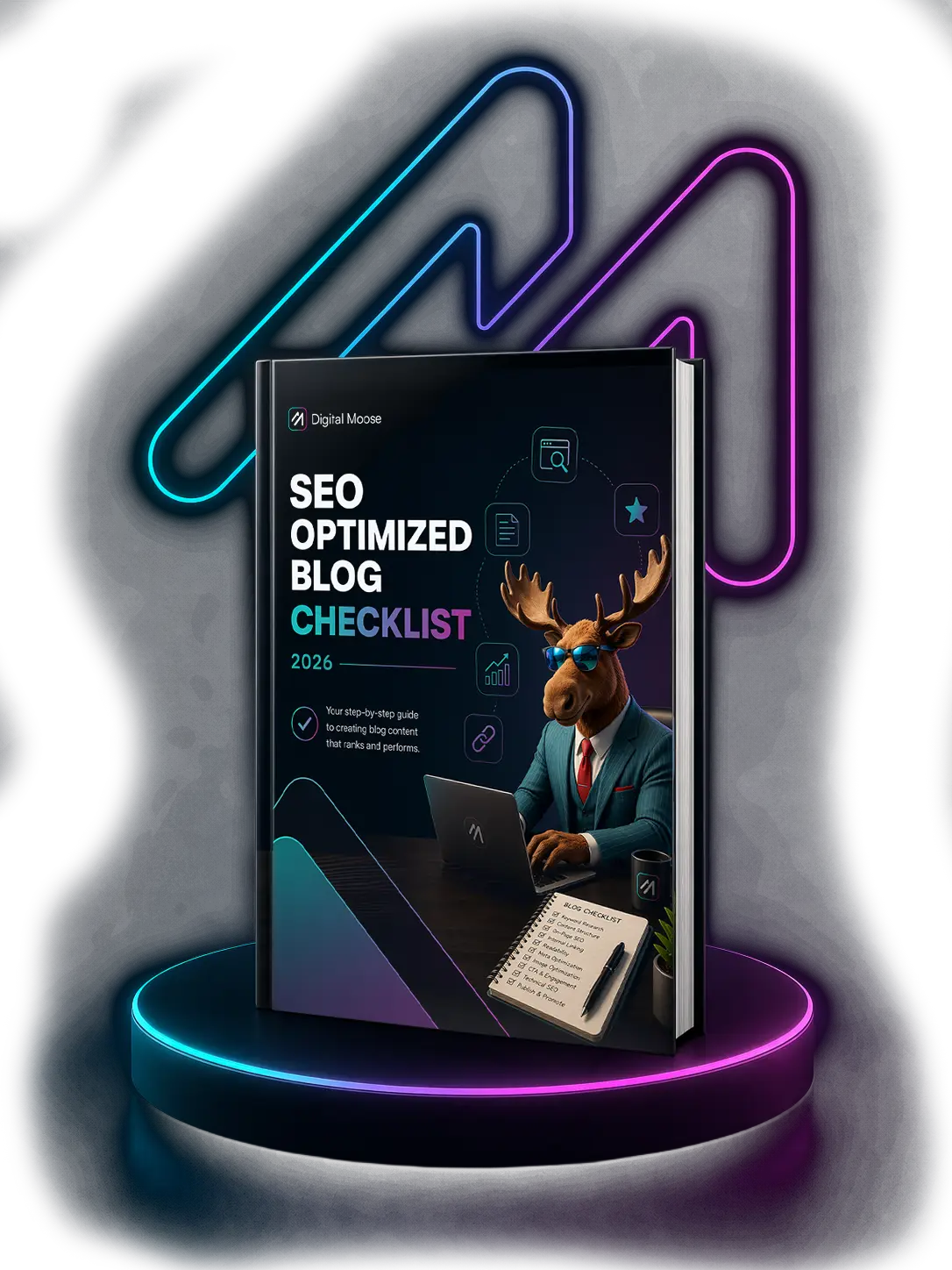
The checklist we run on every client engagement, before a single post ships. Thirty-eight items across writing, technical foundation, and off-page promotion — plus the Topical Authority Map method we use to turn scattered blog content into rankings that compound.
Written for 2026, not repackaged from 2022. Covers INP (the Core Web Vital that replaced FID last year), GA4 setup, AI-era content quality, the four search-intent types, E-E-A-T framing, and specific tool recommendations at every step. Built by Kevin and Guido from decades of pre-Digital-Moose experience in SEO and web development.
How to Use This Checklist
You don't need to implement every item at once. Start with the sections most relevant to your current situation:
Launching a new blog
Focus on Section 2 (Technical Foundation) and Section 1's keyword items first. Get the foundation right before publishing content.
Existing content not ranking
Focus on Section 1 (Writing & On-Page) items for headings, internal links, and title tags. Small improvements there often unlock quick wins.
Publishing consistently but not getting traction
Work through Section 3 (Off-Page & Promotion) — if your content is solid but invisible, distribution and backlinks are the likely gap.
What's Inside
A sample of the items inside the PDF — enough to show it's worth your inbox.
- Core Web Vitals pass (LCP < 2.5s, INP, CLS — what INP replaced and why it matters)
- Topical Authority Map before any post ships — the pillar/cluster rule we won't break
- Schema stack: Article + FAQ + LocalBusiness + Organisation on every relevant page
- Image optimization at the threshold (WebP, under 100 KB, Squoosh workflow)
- The 4 search intent types and how to match them to CTAs that actually convert
- Google Alerts for unlinked brand mentions — the highest-conversion backlink tactic
Related SEO Services
Download the Complete SEO Checklist
Thirty-eight items, three sections, the Topical Authority Map method, and the 2026-current technical checklist most free guides still haven't updated. Your email, the PDF in your inbox, done.
Send Me the ChecklistCommon questions
SEO Checklist FAQ
How long does it take to see results from this checklist?
SEO is a marathon, not a sprint. Technical fixes often deliver quick wins within weeks. Content strategy and topical authority compound over months. Our honest timeline: movement in month three, meaningful traffic growth from month six onwards. Anyone promising faster results without context is overpromising.
Do I need to implement every item on this checklist?
No. Start with the section most relevant to your situation. If your site loads slowly or has indexing issues, work through the Technical Foundation section first. If your content isn't ranking, focus on Writing & On-Page. If you're publishing consistently but not getting traction, the Off-Page & Promotion section is likely your gap.
What's the difference between on-page SEO and technical SEO?
On-page SEO covers what lives inside a specific page — title tags, headings, internal links, content quality. Technical SEO covers the site-wide conditions that let Google crawl, index, and rank your pages at all — site speed, mobile-friendliness, schema, canonicals, sitemap. Both matter; neither works without the other.
How often should I update this checklist?
Google updates its algorithm and Core Web Vitals signals regularly. This checklist is dated 2026 and reflects current-year realities, including INP replacing FID in Core Web Vitals and GA4 replacing Universal Analytics. We update the checklist when material changes happen — subscribe to get the next version automatically.
Can I do SEO myself or should I hire an agency?
Most of the checklist items are learnable. Writing one genuinely good post takes four to eight hours. Multiply by weekly publishing and you're looking at 20–30 hours a month, every month, plus technical maintenance and promotion. For some owner-operators that's viable. For most small businesses, it isn't — which is why most DIY SEO efforts stall after two or three months. If you'd rather have a team run this system for you, that's what The Digital Moose System does.
What tools do I need to implement this checklist?
At minimum: Google Search Console (free), Google Analytics 4 (free), and an SEO plugin if you're on WordPress (Rank Math or SEOPress — both have free tiers). Paid tools like Ahrefs or Semrush accelerate keyword research but aren't required to start. The full tool list is inside the PDF, broken down by checklist item.
Need Help Implementing This Checklist?
Digital Moose builds strategy-first SEO systems for Canadian local businesses. We handle the technical work, content strategy, and ongoing optimization so you can focus on running your business. Every engagement starts with a full audit and topical authority map.
- Full technical and on-page SEO audit
- Keyword research and topical authority map
- Content strategy and 90-day calendar
- Google Business Profile optimization
- Monthly reporting — rankings, traffic, leads
Starting at $1,497 CAD/month. Month-to-month contracts.
Send Me the Checklist